New, Never Installed: Certified-Design Aircraft Propeller
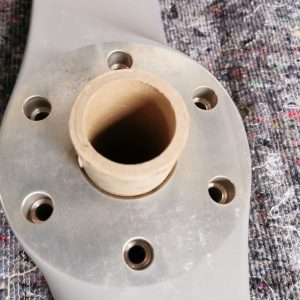
The Sensenich Propeller – P/N 74DM6-0-60
A Sensenich Propeller P/N 74DM6-0-60 may also be advertised as a Sensenich 74DM6 Propeller or 74DM6-0-60 Aircraft Propeller when every model character, suffix, serial marking, and alteration detail is stated accurately.
Fixed-pitch construction provides established blade geometry without a pilot-controlled in-flight pitch-change mechanism.
Correct dimensional and installation research supports safer and more efficient propeller selection.
The Two-Blade Aircraft Propeller, Sensenich Aircraft Propeller, Replacement Aircraft Propeller, and Certified Aircraft Propeller phrases can help professional buyers locate a component for maintenance, restoration, new construction, or inventory.
Confirming the Exact Aircraft Propeller
A propeller should not be accepted as P/N 74DM6-0-60 solely because it resembles another Sensenich model shown in a catalog or online advertisement.
Original packaging can support the product history but does not replace inspection of the actual propeller.
Verifying Condition Before Installation
An unused propeller may still develop coating damage, corrosion, moisture exposure, scratches, dents, contamination, or packaging-related abrasion.
Detailed condition evidence supports responsible marketing of the Sensenich Propeller – P/N 74DM6-0-60
Understanding Fixed Blade Geometry
The 74DM6-0-60 should be selected using applicable technical data rather than general claims about improved climb or cruise performance.
Incorrect dimensions can produce operational concerns even when the propeller fits physically on the flange.
Inspecting the Sensenich Aluminum Propeller
Material condition should be reviewed by appropriately qualified aviation personnel.
Both blade faces, backs, roots, tips, leading edges, trailing edges, and hub transitions should be examined under suitable lighting.
74-Inch Aircraft Propeller Dimensions
Verified dimensions support correct replacement-propeller selection.
Diameter should be measured using an appropriate hub-center reference and complete tip-to-tip procedure.
Comparing Pitch Between Both Blades
Pitch influences theoretical forward movement, engine loading, achievable RPM, climb behavior, and cruise characteristics.
Professional pitch evaluation protects the Sensenich 74DM6-0-60 Propeller.
Avoiding Universal O-320 Compatibility Claims
A propeller approved for one O-320-powered aircraft may not be approved for another aircraft using a different engine variant, airframe, spinner, or installation configuration.
A previous aircraft application can provide useful context but does not replace current approved technical data.
Inspecting the Complete Propeller Assembly
A Two-Blade Aircraft Propeller should be evaluated as a complete matched assembly rather than as two independent blade components.
Storage supports should protect both blades without applying uneven pressure.
Preparing the Replacement Aircraft Propeller
A genuinely never-installed propeller should not show unexplained fretting, bolt loading, or flange-contact patterns.
Fasteners should not be selected solely by visual appearance, basic diameter, or thread size.
Inspecting Blade Tips and Trailing Edges
The leading edges should be inspected for dents, scratches, gouges, corrosion, coating damage, packaging abrasion, and transportation impact.
Unauthorized sanding, filing, blending, refinishing, or polishing should be avoided.
Maintaining the Factory Finish
Complete corrosion evaluation supports responsible purchasing.
Protective covers should prevent contamination and impact without encouraging condensation around the aluminum.
Supporting Installation Eligibility
Certified design status does not automatically establish the present serviceability, airworthiness, or installation eligibility of an individual propeller.
Organized records strengthen the commercial value of the Certified Aircraft Propeller.
Maintaining Aircraft Propeller History
Conflicting or incomplete identification should be resolved before payment or installation.
Complete history supports future maintenance, installation research, and resale.
Buying the Sensenich 74DM6-0-60
Uncertainty regarding identity, dimensions, storage, condition, or installation eligibility should be resolved before shipping.
- Resolve identity, applicability, dimensions, condition, and package-completeness questions before payment.
- Confirm the manufacture or purchase date, storage duration, environmental conditions, preservation method, ownership history, and absence of operating time.
- Inspect and photograph the propeller immediately after delivery before cleaning, measuring, balancing, repairing, mounting, or modifying it.
Aircraft Propeller Crating Requirements
Blade tips, leading edges, trailing edges, mounting surfaces, bolt holes, identification plates, and factory coatings require suitable protection.
The propeller should remain immobilized throughout transport.
Protecting the Propeller Before Installation
During storage, the propeller should remain clean, dry, supported, protected from impact, and separated from corrosive chemicals or uncontrolled environmental exposure.
The unit should not be stored directly on damp concrete, exposed ground, unstable shelving, or areas vulnerable to roof leaks.
Professional Installation Requirements
Professional installation protects the propeller, engine, and airframe.
Fasteners click here should be tightened and secured according to applicable procedures, torque values, and tightening sequences.
Authorized personnel should complete all required maintenance records and return-to-service actions.
Preventive Blade and Hub Inspection
Routine maintenance should include inspection of blade faces, backs, leading edges, trailing edges, tips, hub, mounting hardware, spinner components, blade tracking, finish, and signs of corrosion or movement.
Preventive care supports dependable General Aviation Propeller service.
Buying P/N 74DM6-0-60
Honest information strengthens buyer confidence and reduces disputes.
The lowest advertised price may not represent the lowest installed cost when hardware, records, or compatibility information are incomplete.
New, Never Installed
New, Never Installed may suit aircraft owners, maintenance organizations, builders, propeller specialists, restorers, aviation dealers, and general aviation operators seeking an identifiable unused component.
The strongest purchasing decision begins with confirming the full model designation, serial number, manufacturing details, 74-inch diameter, 60-inch pitch, blade count, hub, bolt pattern, aircraft applicability, engine compatibility, storage history, physical condition, and documentation.
Whether the requirement is a Sensenich Propeller P/N 74DM6-0-60, Sensenich 74DM6 Propeller, or 74DM6-0-60 Aircraft Propeller, exact identification should guide the purchase.
With complete evaluation and continued care, the Sensenich Propeller – P/N 74DM6-0-60